
Can Democracies Prevail?
Xi Jinping and Vladimir Putin believe their autocratic political and economic systems will gradually defeat the West’s democracies. How can they be stopped?
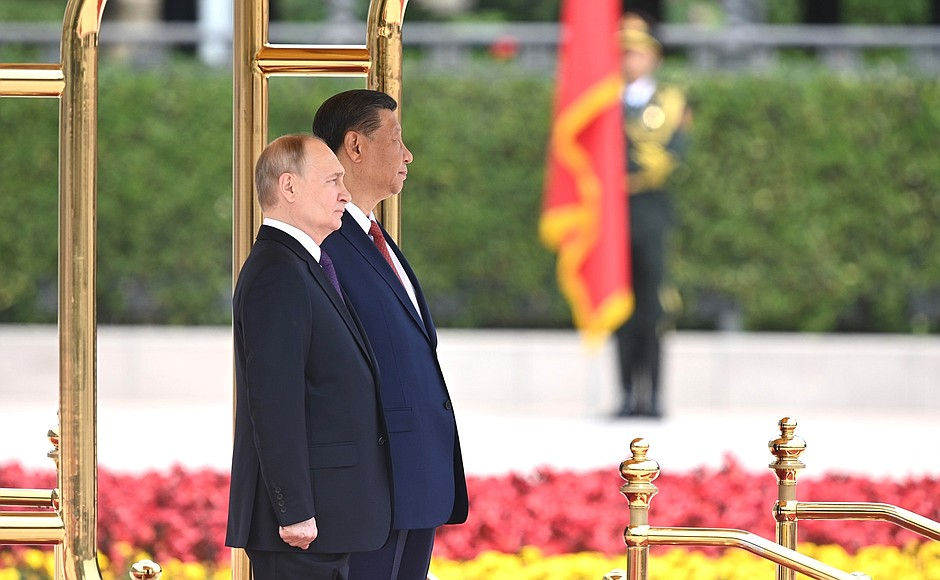
President of the People’s Republic of China Xi Jinping and Vladimir Putin / Photo: Sergei Bobylev, RIA Novosti
The liberal international order, which has dominated world affairs since World War II, is now collapsing, and China and Russia appear increasingly confident that top-down dictatorial regimes will fill the void. Some politicians in the BRICS group agree, as do some Western analysts who fear — or hope —Xi and Putin are correct.
Michael McFaul, US ambassador to Russia from 2012 to 2014, and a leading academic at Stanford University, describes the dangers in his new book, Autocrats vs. Democrats: China, Russia, America, and the New Global Disorder (Mariner, 2025).
He also offers many reasons to trust in the long-term strengths of democracy, along with dozens of recommendations for reversing the drift toward autocracy.
McFaul’s approach is straightforward: “What did we do right since 1945?” he asks, and “what did we do wrong?” Looking at this record and how the world has evolved, he considers, “What should we do now?”
The US embraced three misperceptions that distorted its policies during the Cold War, he argues, and their modern-day equivalents should be avoided.
Startled by Russia’s lead in space as represented by the Sputnik satellite in 1957, US policymakers often exaggerated Soviet military power, and overestimated the size and strength of the Soviet economy, at least until the final years of the USSR. At the same time, they overstated communism’s global appeal.
Exaggerating its adversary’s power and the vulnerabilities of the world’s democracies pushed the US to focus on winning the arms race while undervaluing other tools of power and influence.
Overestimating communist threats led Washington to overreach not only in Vietnam but also in Iran, Guatemala, Angola, Nicaragua, and Iraq. Suspicion of others also probably led Washington to miss opportunities for mutual gain.
McFaul writes, for example, that a strategy based on principles of national self-determination and the Atlantic Charter might have succeeded in Indochina as it did in Yugoslavia.
Washington has alternately underestimated and exaggerated China’s military, economic, and political assets. It is naïve to hope that a Leninist party could ever become moderate or liberal, but, unlike the USSR, Xi’s China does not appear intent on destroying and supplanting Western capitalist democracy.
How can the West replicate Cold War successes today? The US and its allies must invest sufficiently in defense to deter and counter aggression from any quarter, but without weakening societal fitness, education, or healthcare. Like George Kennan in the late 1940s, McFaul urges Americans to improve at home, and the most pressing concerns are to reduce polarization and inequality.
The US must also modernize its nuclear arsenal to ensure mutual assured destruction and deter two major threats — not just one. For McFaul, this requires more ships, more submarines, and more missiles, large and small.
Critics may say that this would mean more pointless rounds of arms racing, but few observers would dispute McFaul’s call for stronger structures to safeguard reconnaissance and communication assets in space from attack.
The US should also reinforce its alliances and instruments of soft power, including global communications in the age of AI.
Putin and Xi Jinping are working to undermine the post-1945 international order, but this is no reason for Washington to adopt Chinese economic practices such as protectionism. The US can benefit from the fact that many leaders and societies worldwide still value the international institutions it helped create at the end of World War II.
These include the United Nations, the International Monetary Fund (IMF), World Bank, World Trade Organization (WTO), and multilateral institutions like NATO, the G7, the Organisation for Economic Cooperation and Development (OECD), and newer configurations like the Anglophone AUKUS and the Quad. The US is still the indispensable nation, but it must lead, not bully.
“The Chinese are not 10 feet tall,” McFaul writes. “Americans must be less fearful about global challenges and more confident in our country, our power, our ideas, and our global allies, partners, and organizations.”
By Walter Clemens. Walter Clemens is Associate, Davis Center for Russian and Eurasian Studies, Harvard University, and Professor Emeritus, Department of Political Science, Boston University. He wrote Blood Debts: What Putin and Xi Owe Their Victims. Article and pictures first time published on CEPA web page. Prepared for publication by volunteers from the Res Publica - The Center for Civil Resistance.


Comments