
2026 — Europe’s Year of Living Dangerously
Russia will step-up its shadow war on Europe in the New Year, attacking infrastructure and disrupting democracy in a bid to exploit Western disunity.
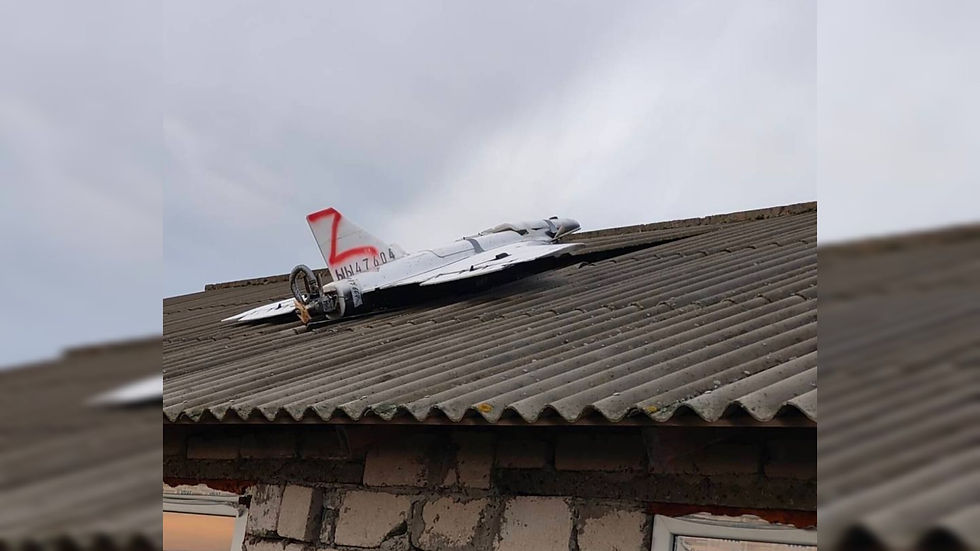
Russian drone on the roof of a barn in Moldova / Source Belcy 24
In 2026, the Kremlin will seek to demonstrate that Russia retains the initiative and remains a great power despite its economic and military decline. This is designed in part to emphasize a country on the brink of historic success and to build on images of President Vladimir Putin hosting “peace talks” with the US, and strutting the world stage during his December visit to India.
Alongside diplomatic posturing and photo opportunities, this goal will be manifested across three expanding arenas of hybrid warfare against Ukraine’s allies in democratic Europe.
Firstly, sabotage will target Europe’s expanding defense production infrastructure and Ukraine-bound supply chains. As continental ammunition factories ramp up and logistics networks are more visible, they will become prime targets. There have already been troubling events, including a Russian attack on a Ukraine-linked warehouse in the UK, an arson attack attributed to Russia at an air defense firm in Germany last year, as well as an unexplained fire at a weapons factory at Cugir, Romania, in August.
Expect attacks designed to delay weapons deliveries, drive up security costs, and force governments to divert resources from supporting Ukraine to domestic protection.
The second element will be subversion, especially information warfare of the type seen in Moldova’s election in September, which will intensify dramatically during key elections in 2026, especially those the Kremlin regards as key, such as the Hungarian election in April. Pro-Russian populist parties already top polls across Europe, and every percentage point and political message amplified to their advantage offers Moscow hope of crumbling Western resolve.
Coercion, through conventional military provocation, can also be expected to escalate from sporadic to systematic. Expect increasingly aggressive airspace and naval violations, like September’s 12-minute combat aircraft incursion over the Gulf of Finland, and nuclear rhetoric calibrated to create psychological pressure. The intended message is that supporting Ukraine risks direct escalation with Russia, so restraint is wiser.
These will be backed by the favored new tactic of threatening civilian aircraft and passengers, including political leaders, with drone incursions near runways. Irish Justice Minister Jim O’Callaghan said drones near Dublin airport during Ukrainian President Volodymyr Zelenskyy’s visit to Ireland in December were intended to pressure “EU and Ukrainian interests,” while France is investigating after drones were spotted over the base of the French nuclear deterrent in Brest. French marines fired a jamming device in response.
The UK’s air regulator, the CAA, warned in November that it was “not a question of if, only of when” major airports like Heathrow suffered attacks like those that have closed down Copenhagen, Munich, and Brussels airports this year.
Russia has been helped by Europe’s pedestrian attempts to build credible hybrid deterrence. The continent’s failure to establish clear thresholds for shadow warfare attacks means incidents of sabotage, cyber-interference, and misinformation are still largely treated as isolated crimes rather than elements of a Russian hybrid strategy.
NATO is finally moving — with its top commander and Secretary General outlining policy shifts — but Europe will enter 2026 behind the curve and with the potential for weakened resolve.
Politically, populist right-wing parties, often with pro-Russian sympathies, are topping polls in a year of major elections on the continent; economically, governments have been constrained by slow growth, sticky inflation, and energy supply uncertainties; and militarily, many are only at the beginning of their rearmament programs.
These factors combine to limit Europe’s ability to formulate a decisive response, strengthening the Kremlin’s belief that its tactics will succeed. There has been close to zero cost for Russia’s shadow activities, and it is therefore unsurprising that it has stepped up its campaigns throughout this year.
Europe must establish credible deterrence, or Putin will be emboldened to go much further.
Putin is betting Europe lacks the resolve to impose meaningful costs on Russia. And the evidence suggests he is right: even the Kremlin’s open and evidence attack on Poland in September, using as many as 20 military drones, brought nothing more than European NATO pledges to strengthen defenses. Likewise, Russia’s planting of parcel bombs on transatlantic courier planes.
Proving Putin wrong requires clarity over what the West won’t tolerate and finally defining clear thresholds. What level of sabotage should trigger NATO’s collective defense, which diplomatic personnel should face expulsion for facilitating attacks, and how the alliance will respond to systematic airspace violations? Until there are answers, Russia’s assault will continue.
By William Dixon and Maksym Beznosiuk. William Dixon is a Senior Associate Fellow of the Royal United Services Institute, specializing in cyber and international security issues. Maksym Beznosiuk is a strategy and security analyst and writer whose work focuses on Russia, Ukraine, and international security. Article first time published on CEPA web page. Prepared for publication by volunteers from the Res Publica - The Center for Civil Resistance.


Comments